Salt air: what it really does to wheels
Salt attacks metal. On an alloy rim, corrosion settles where the tyre bead sits: the seal deteriorates and the wheel slowly loses pressure. Metal valves, their nuts and the balance weights suffer too. On a wire wheel, the spoke nipples and the rim well need watching, under the tape that protects the inner tube.
A tyre that goes flat with no visible puncture therefore calls for a strip-down. The rim seat is inspected and cleaned before a new tyre goes on; if the wheel itself is affected, the workshop shows you before going any further.
Cross-ply or radial on a car kept by the sea?
Many cars from the 1950s and early 1960s left the factory on cross-ply tyres. The cross-ply keeps the period look and steering feel; it follows road irregularities more and grips less well in the wet. A radial of the same overall size brakes and steers better, at the cost of steering that can feel heavier when parking.
Both choices can be defended; what cannot be defended is mixing them. The tyres on one axle must have the same construction, and four identical tyres remain the sensible rule. Michelin, Pirelli or Avon, for example, still make period sizes, and the search by size on the site includes a classic category.
From Antibes to the Mougins workshop
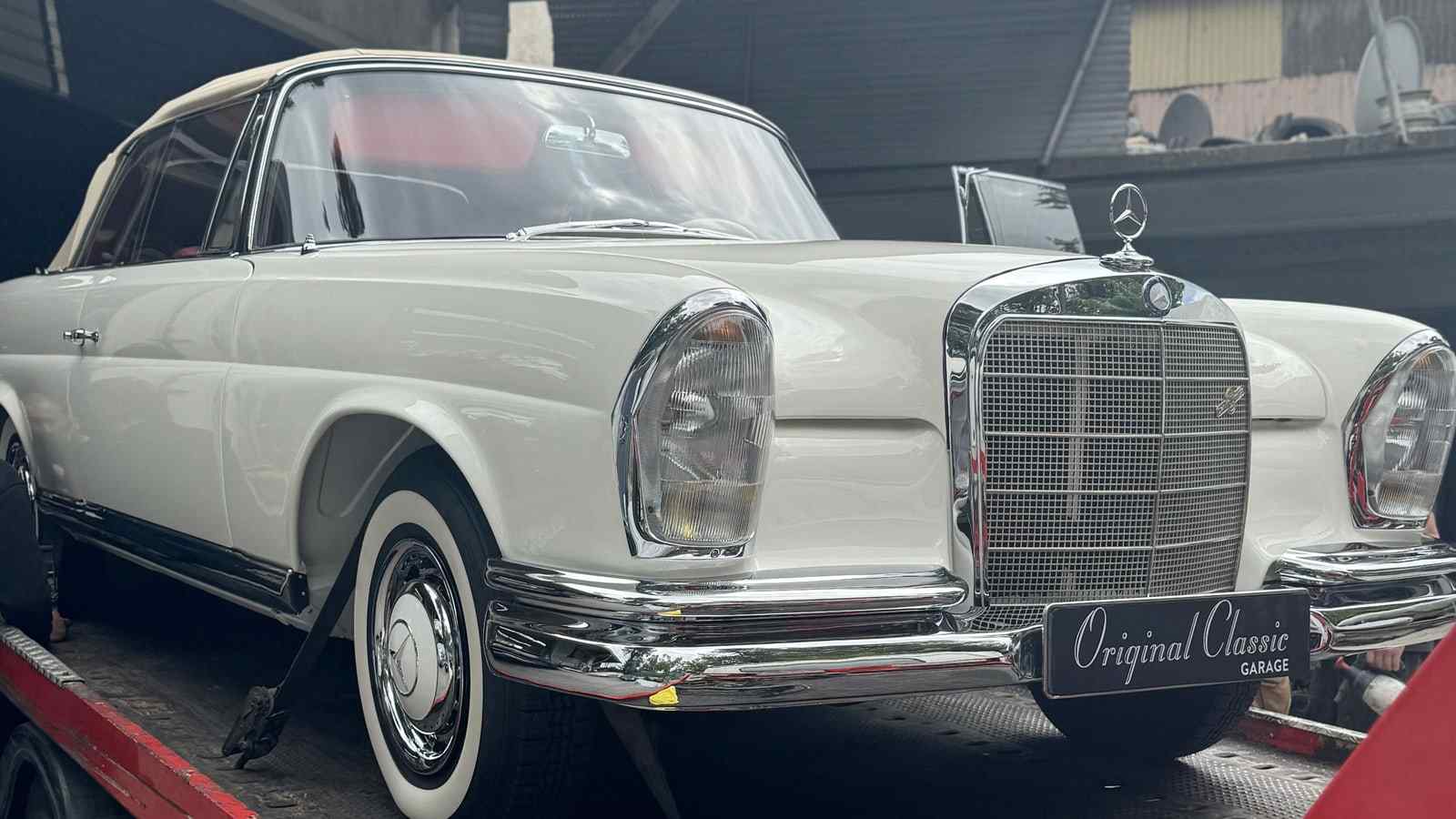
The workshop is about 13 km from Antibes by road. Tyres can be shipped to you, or wait in Mougins for the day of fitting and balancing, booked by appointment. If the car should no longer run on its old tyres, transport by truck can be arranged on request.
A car that spends the winter by the harbour does better in storage at Mougins, away from the seafront. For an older Mercedes, the Mercedes-Benz tyres page covers the fitments; for the big city next door, see tyres in Nice.