How does salt air attack a car body?
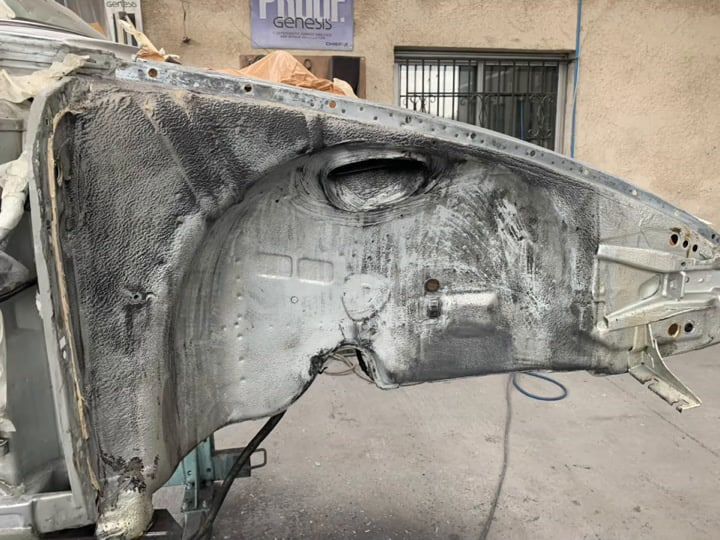
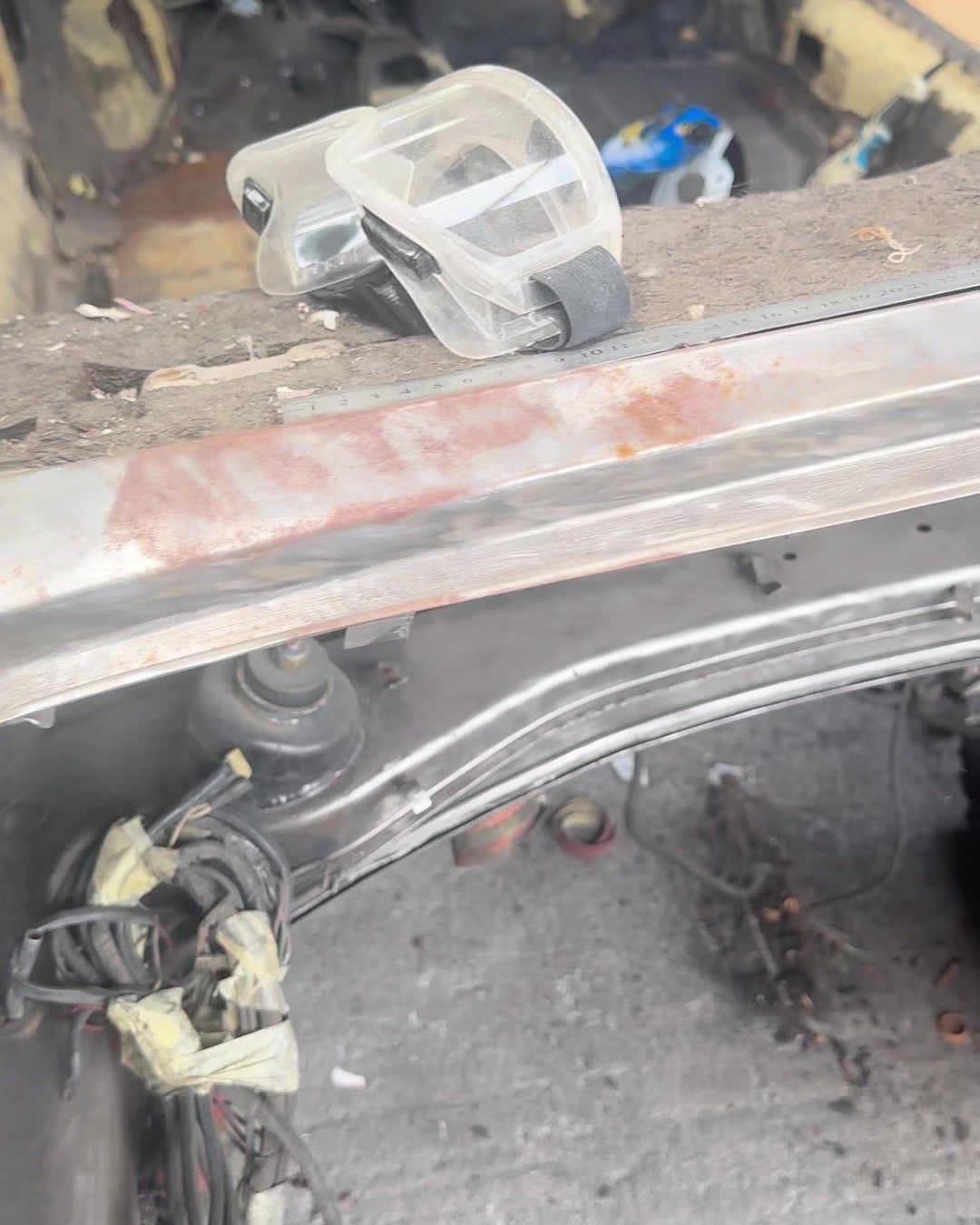
Airborne salt settles on the car, mixes with the night’s damp and gathers wherever water drains badly: sills, door bottoms, wheel arches, boot shut lines, the underside of wings. Rust starts inside the box sections, under the paint, and only shows as a blister or a brown trace. By the time it is visible, it has already spread.
For luxury car bodywork in Antibes, the inspection therefore starts with those hidden areas: we probe, scrape where needed, and look inside the sills before deciding what to treat.
Treat the rust, do not hide it
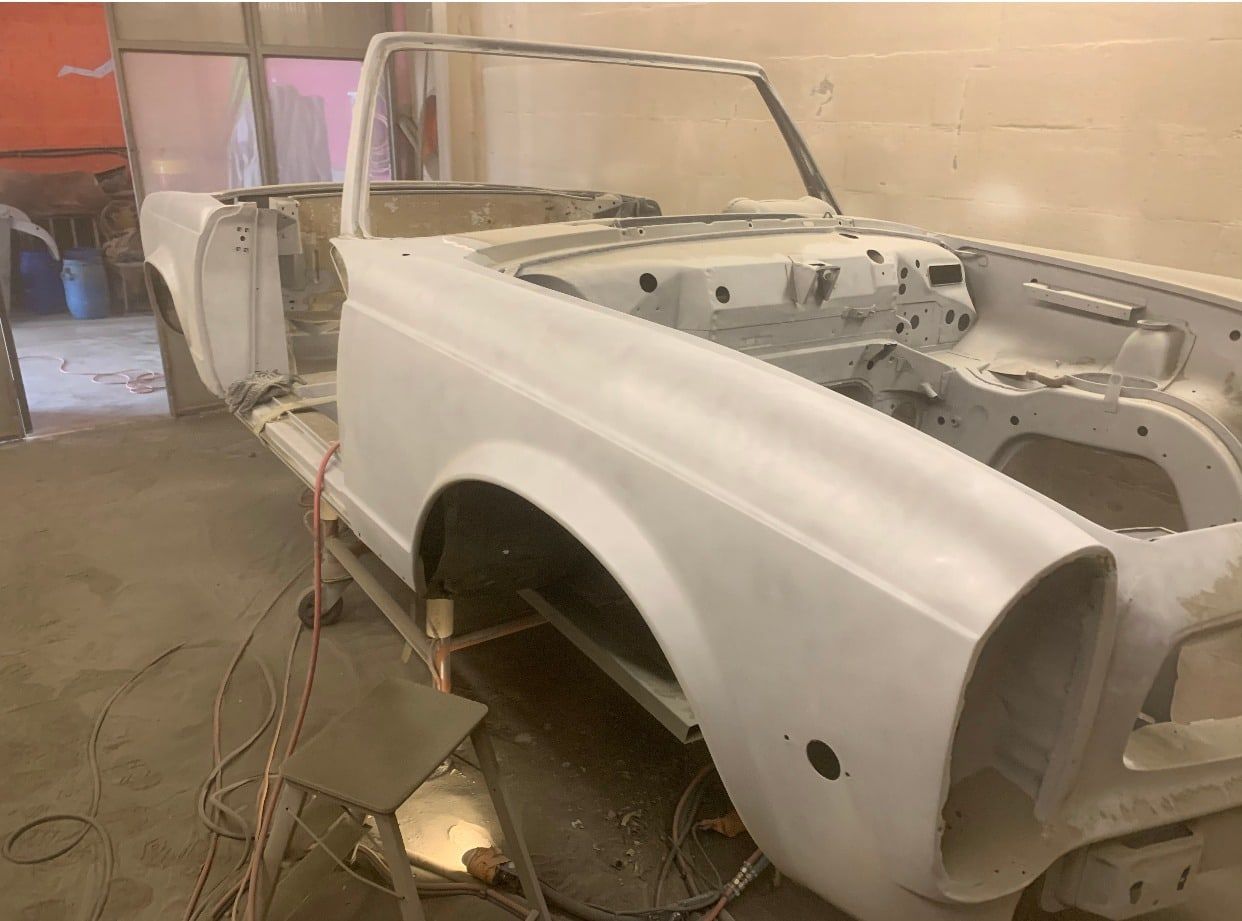
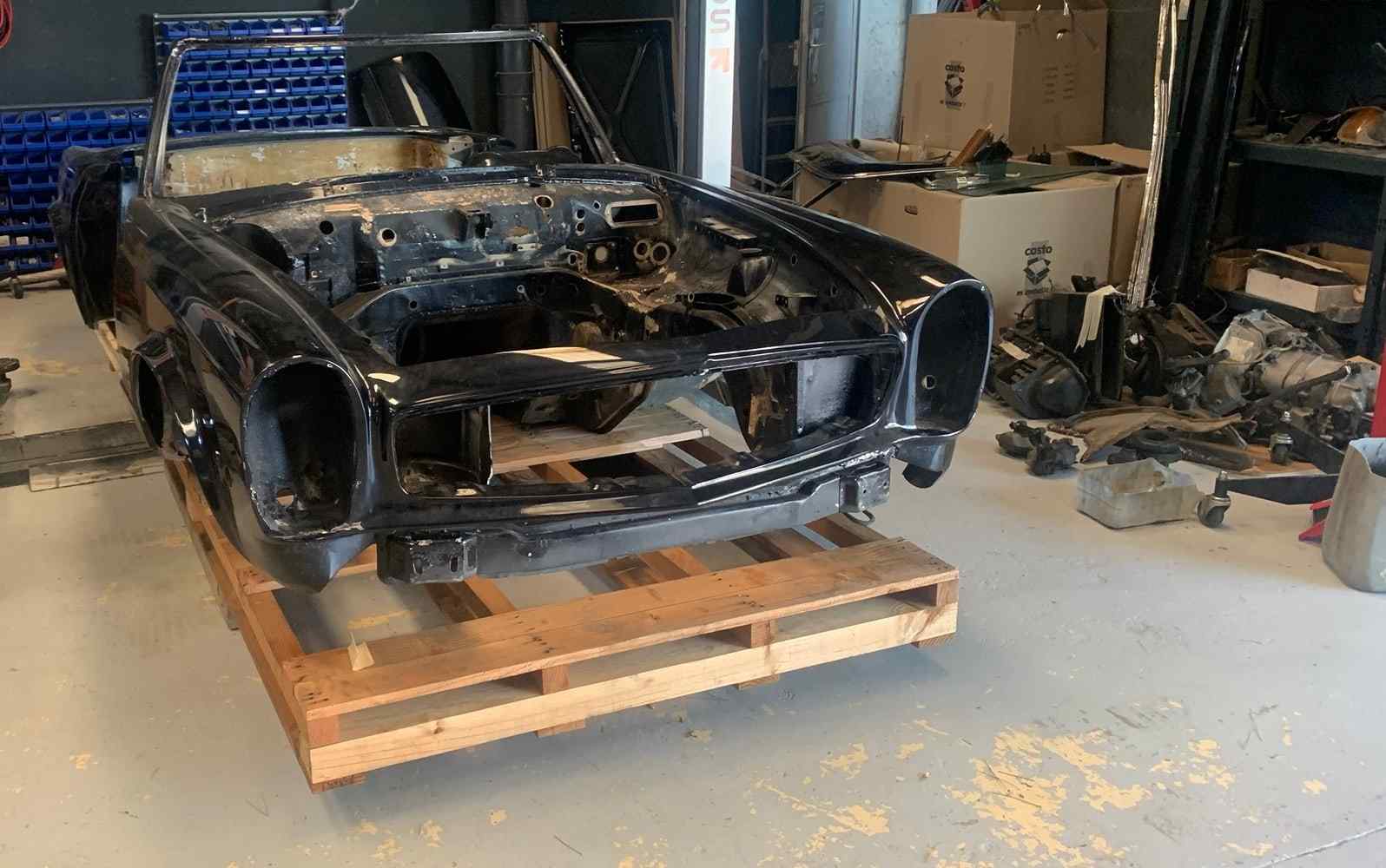
The only lasting repair is to cut the corrosion back to sound metal, rebuild or replace the panel, and protect everything before paint. A coat of primer over remaining rust comes back within a few seasons. On older cars, the workshop can go as far as stripping the body bare, as on the 1967 Porsche 911 S Targa.
- checking box sections and sills
- removing corrosion back to sound metal
- repair or replacement of affected panels
- protecting bare metal before paint
Old-town lanes and folded mirrors
The other Antibes feature is narrow streets and marinas: a wall brushed, a mirror folded, a wing scraped by a bollard. This damage is simpler to repair than corrosion, but it often hits the same fragile areas, the wings and the door bottoms.
Thirteen kilometres to the workshop
The Mougins workshop is about thirteen kilometres from Antibes. A car that runs can come under its own power; otherwise transport is arranged on request. For the knocks of daily parking, see the page on bodywork in Cannes, and ask for a quotation from photographs.