What does salt do to an old body?
Sea spray leaves salt on the car and deep in its recesses. Salt holds moisture: the steel stays wet for longer, and rust advances wherever the paint is already weakened, at a stone chip, the edge of a seal, a folded seam. Cars built before galvanised steel became widespread are the most exposed.
The damage works from the inside outwards. By the time a blister shows on the bottom of a wing, the box section behind it has often been affected for a long while.
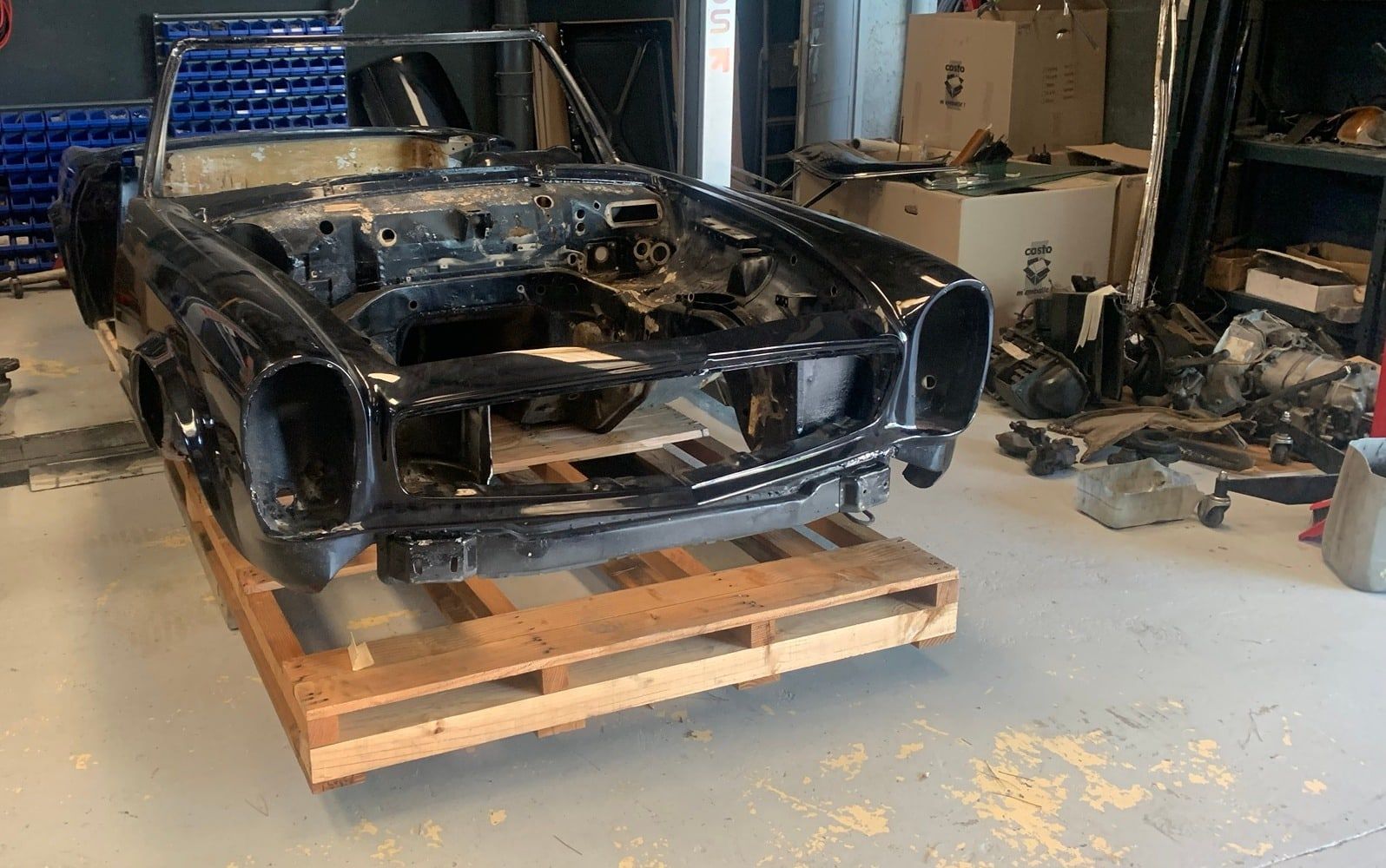
The bare-metal strip decides the project
On a car that has lived by the sea, a serious restoration means a shell stripped to bare metal. It is the only way to tell sound steel, which is kept, from the areas to be cut out and remade. The bare shell is protected with primer straight away.
The metalwork itself is described on the bodywork in Antibes page. Here it forms part of a full restoration, with mechanics, paint and trim following in order.
Chrome, wiring, brakes: salt does not stop at the panels
Salt air pits chrome, corrodes electrical connections and earth points, and seizes fasteners and brake calipers. A restoration planned for an Antibes car therefore allows, from the quote onwards, for checking the loom, re-chroming bumpers and trim strips, and replacing corroded fasteners.
From Antibes to Mougins: collecting the car
The streets of Old Antibes are narrow, and a truck cannot manoeuvre everywhere. The loading point is agreed beforehand: a clear avenue, a car park near the harbour, the entrance to a residence. Transport by open or enclosed truck is arranged on request.
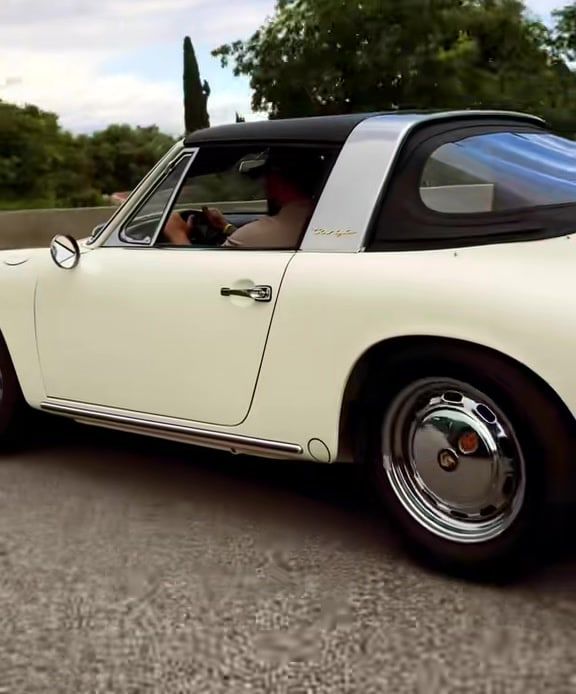
Before you commit, the 1989 Porsche 930 Turbo Cabriolet, stripped to bare metal and followed by metalwork, paint and mechanical work, gives an idea of what such a project involves.