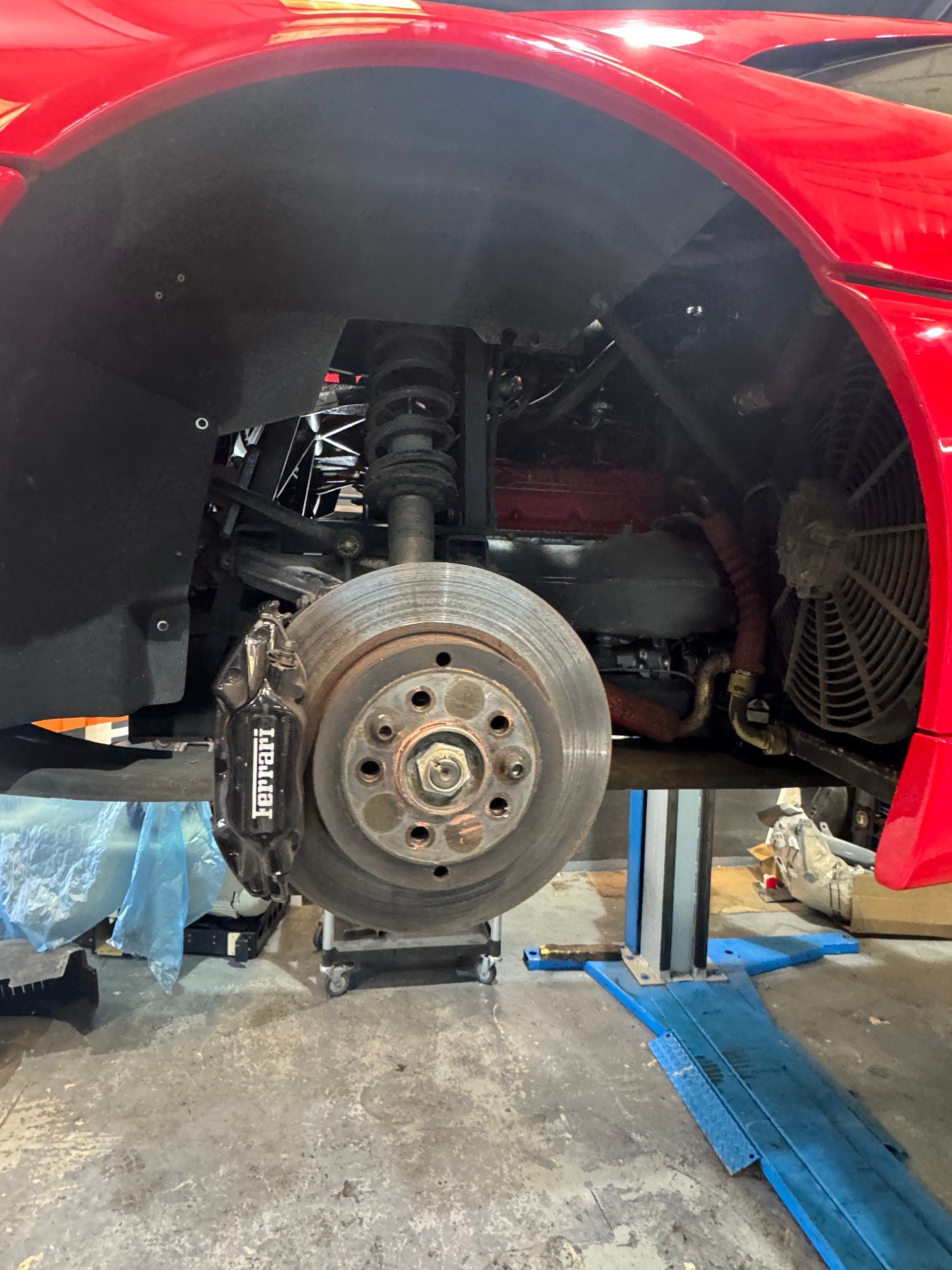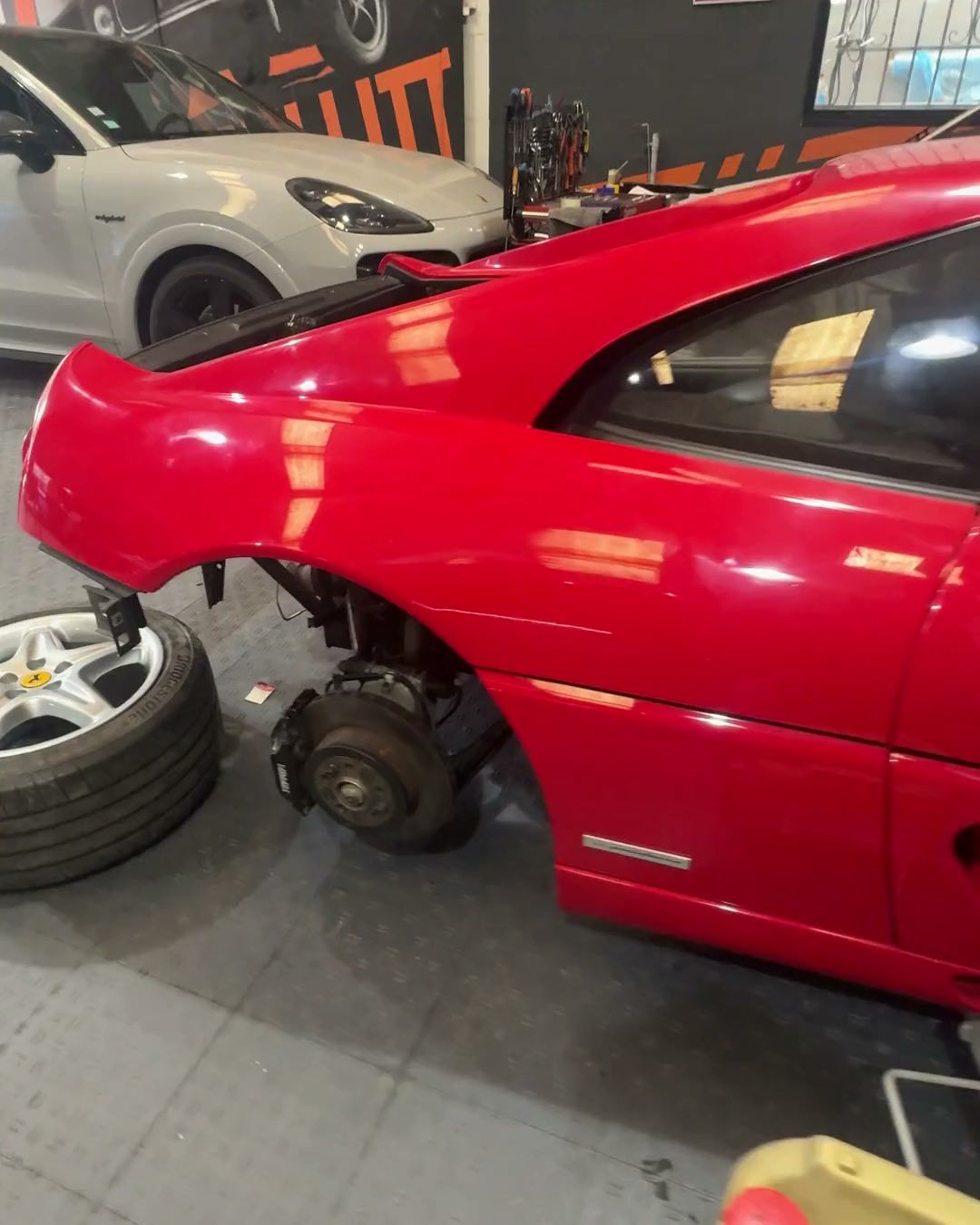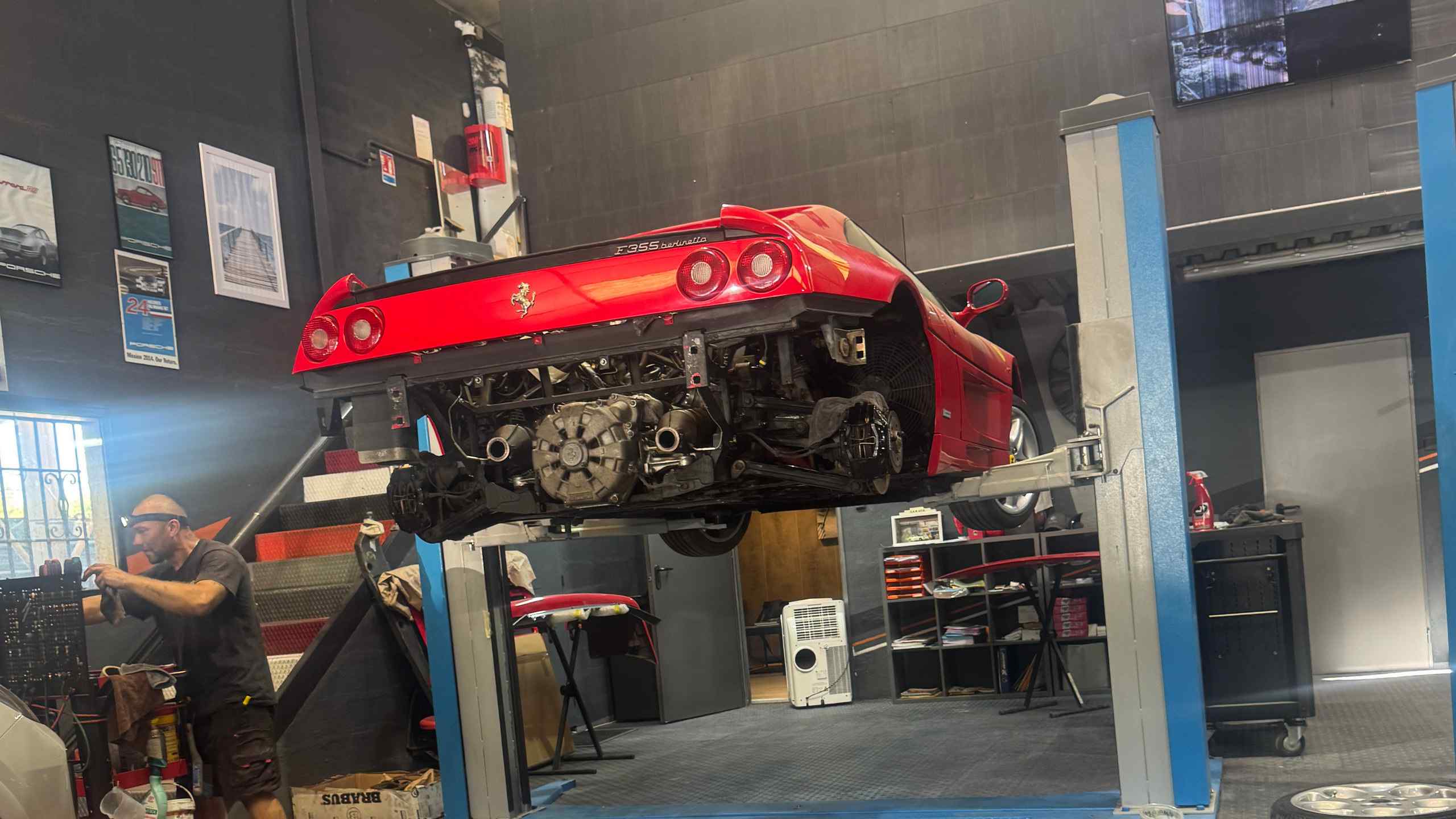
Front and rear: two fitments that cannot be swapped
Mid-engined Ferraris from the 348 to the 488 run wider tyres at the rear than at the front; some cars, such as the 612 Scaglietti and the 599, even have a different wheel diameter on each axle. The wheels cannot therefore be rotated, the rears wear faster, and tyres are replaced in axle pairs, the same tyre on both sides.
Tyre makers produce homologated versions for Ferrari, identified by the letter K and a figure on the sidewall. The marking shows that the tyre was developed with the manufacturer for the model; the load and speed rating, for its part, must always be respected.
Classic Ferraris: metric wheels and period tyres
The 308 was launched on tall-sidewall tyres and fourteen-inch wheels, and tyres with a period tread pattern are still made. A trickier point: some 308s and Mondials, and the early Testarossa, were fitted with wheels whose diameter is given in millimetres and which accept only the metric tyres designed for them. Before any order, the markings on the wheels actually fitted must be read, as our Ferrari 308 and 328 and Ferrari Testarossa pages point out.
On a classic car that covers few miles, age matters more than wear: the date of manufacture is moulded into the sidewall, and a hardened compound no longer grips as it should. A long lay-up can also leave flat spots, a subject covered under Ferrari storage.
Ordering, fitment check and fitting at the workshop
Tyres can be ordered online on the site, by size, by brand or by car, or on quotation when the original fitment has to be tracked down. Before dispatch, the workshop checks fitment for your Ferrari from the chassis number.
Fitting and balancing are carried out at the workshop by appointment. Wide rims with low-profile tyres mark easily, carbon-ceramic discs do not forgive a knock when the wheels go back on, and the pressure sensors of recent models, 458, California, 488 or Roma, are checked at the same time.
- Front and rear sizes read from the car
- Load and speed rating
- Homologation marking, where one exists for the model
- Date of manufacture of the tyres currently fitted
- Type and condition of the wheels