How is the original colour of a Rolls-Royce found?
Rolls-Royce paintwork begins with identifying the colour. On a classic, the reference appears in the car’s papers where they have survived; failing that, we look for an area that has never seen daylight, behind a trim panel or inside the boot. The colour is then developed on test cards, compared with the body in daylight.
The Goodwood cars have made the exercise harder: the manufacturer’s Bespoke programme multiplied the colours available to order, pearlescent and special-effect finishes among them. A blend on a Ghost or a Cullinan is therefore prepared by trial, never on the strength of a code alone. The general method, from flatting to polishing, is described on our paintwork page.
Period lacquer or modern clear coat?
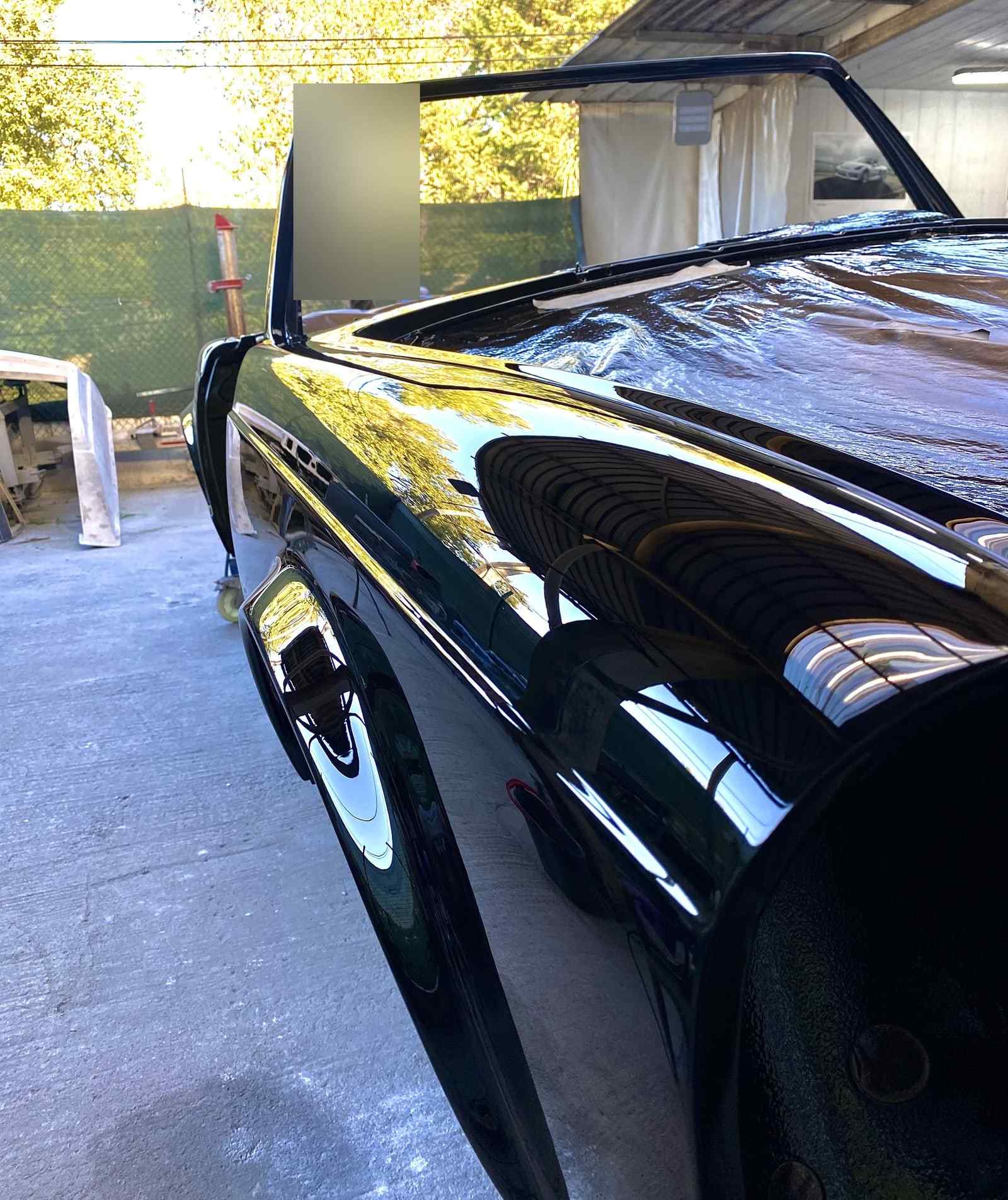
The Silver Cloud and Silver Shadow left the factory in lacquers that do not look like today’s base-and-clear finishes. On a classic car the choice of product decides the result: a gloss that looks too ‘wet’ gives away a recent respray. We discuss it with you before the estimate, according to whether you value fidelity to the original or durability.
Old paint that is still sound can also be kept. Careful machine polishing, once the remaining thickness has been checked, often restores the depth of a dulled lacquer; a full respray is not always the right answer.
Two-tone and coachline: a question of alignment
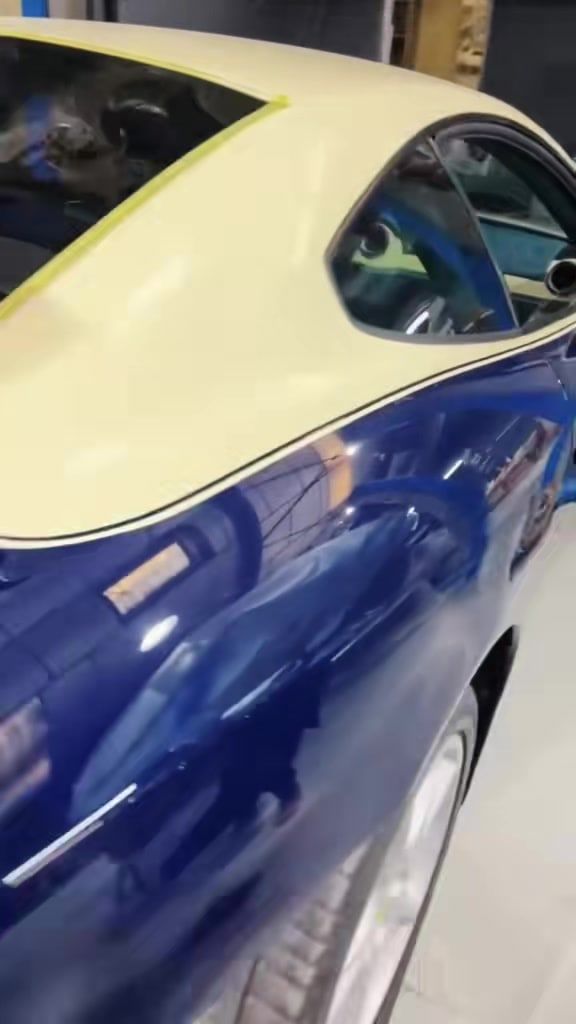
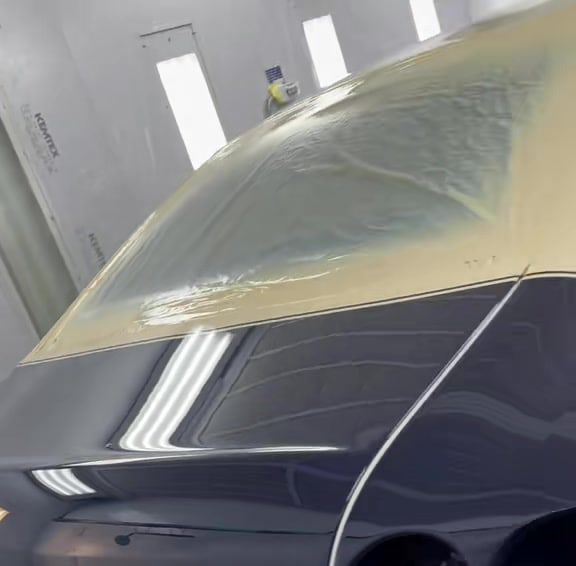
On a two-tone Rolls-Royce the dividing line follows a crease in the body and must run unbroken from wing to wing with the doors shut. It is therefore set out with the car assembled and the panels aligned, before any masking. The coachline, which the marque still has painted by brush at Goodwood, is drawn freehand on the finished paint: signwriter’s work, where the slightest hesitation shows.
Some surfaces are not paint at all. The brushed-steel bonnet that could be specified on the Phantom Drophead Coupé and the darkened brightwork of Black Badge cars are protected throughout the job.
Before the paint: the metal, always
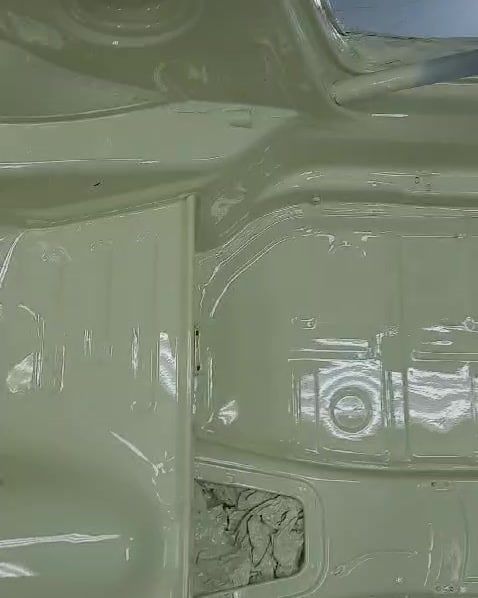
No paint lasts on a doubtful surface. On a Silver Shadow, a blister at the edge of a door or the bonnet often points to corrosion where aluminium meets steel, to be dealt with before any primer: that is the business of Rolls-Royce bodywork. Brightwork, seals, grille and mascot are removed rather than masked.
Bentleys of the same period raise the same questions, covered on our Bentley paintwork page. If your car lives on the Croisette, the paintwork in Cannes page explains how it reaches the Mougins workshop.