Solid or metallic: two different finishes on a classic 911
Many 356s and 911s of the 1960s and 1970s left the factory in plain solid colours: ivory, red, orange, green. A solid finish hides nothing. The slightest ripple in a panel shows, and the depth of the colour owes as much to the preparation as to the paint itself. Metallics such as silver and grey are applied as a base coat followed by lacquer, and their appearance shifts with the painter’s hand, which is why a single wing is seldom repainted without blending the colour into the neighbouring panels.
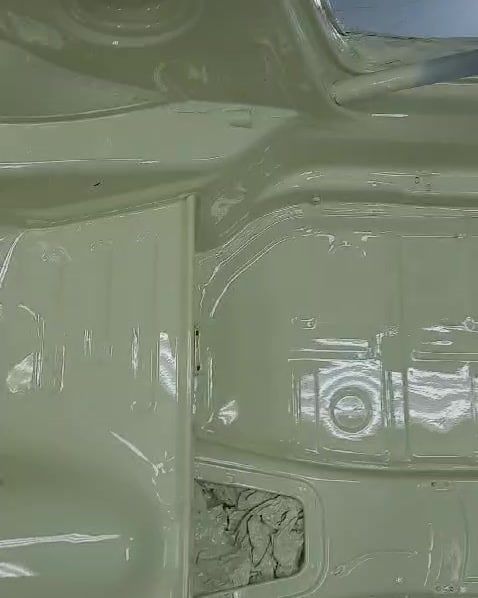
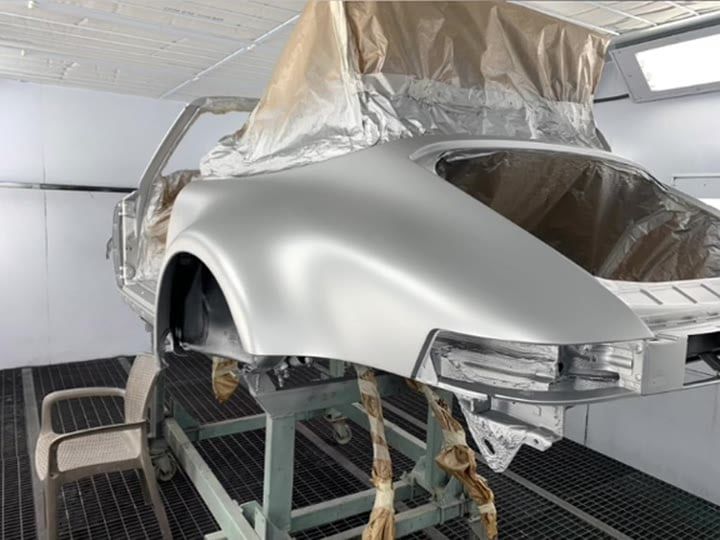
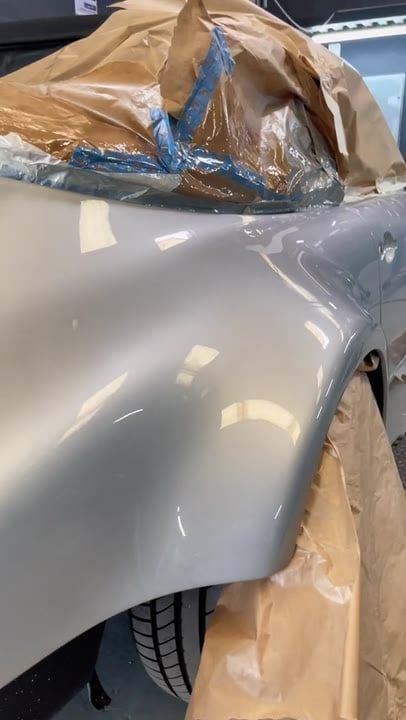
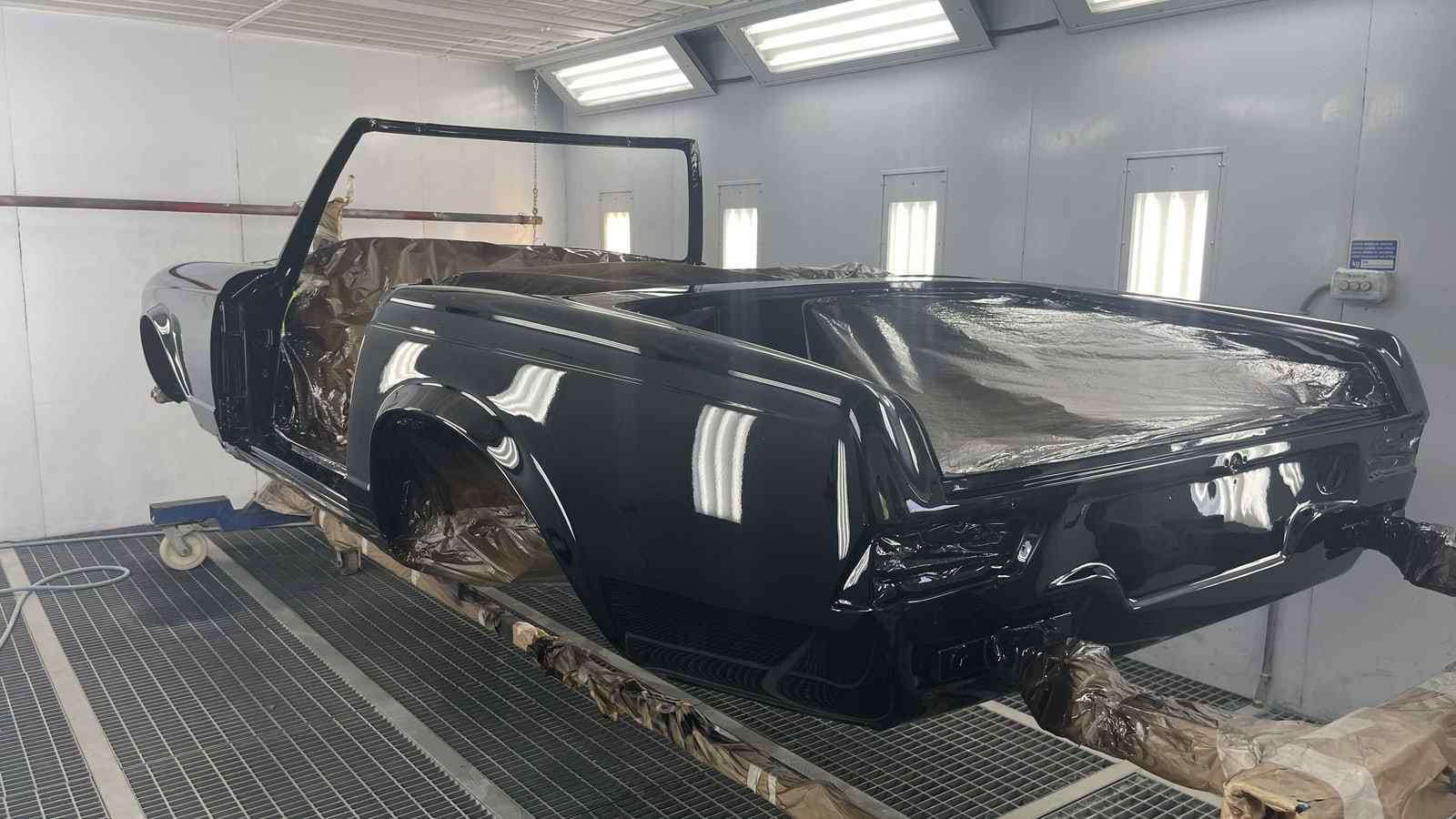
Three cars from the workshop show the range: a 1967 911 S Targa repainted in ivory, floor included, a 930 Turbo Cabriolet in silver and a 964 Carrera 4 in metallic grey.
Bellows, bumpers and Fuchs wheels: what is not painted like steel
The G-series 911 carries impact bumpers with rubber bellows, which are not painted: they are refurbished or replaced. The 930 adds wide rear arches and a spoiler edged in flexible rubber. From the 964 onwards, the plastic bumpers are finished in body colour. They need an adhesion primer and a flexible paint system, otherwise the finish cracks at the first knock; the same applies to the 993 and to every Porsche since.
Fuchs wheels are a subject in themselves, with polished and anodised aluminium spokes and, on many versions, centres painted black. Their finish is decided alongside the car’s paintwork so that the whole remains consistent.
Repainting a modern Porsche: 996 to 992, Cayenne and Panamera
On recent generations, most requests concern local damage: stone chips on the bonnet and front bumper, which sit low and exposed, car-park scratches, a scuffed corner. Many 911s leave the factory with a clear protective film ahead of the rear arches, which is removed before painting and renewed afterwards.
A Cayenne or a Panamera has large panels on which a poorly blended pearlescent colour is quickly noticed. The quote therefore states which panels are painted in full and which are blended. Anything involving the metal itself, or the sensors housed in the bumpers, belongs to Porsche bodywork.
How much does it cost to paint a Porsche?
No serious price can be given without seeing the car. It depends on the extent of the work, whether one panel, one side or the whole car, on the condition of the surface once preparation begins, on how far seals, glass, handles and trim are removed, and on the colour itself.
The quote is itemised after inspection; a first estimate can be given from photographs and video, and you are sent pictures of the main stages as the work proceeds. The method shared by every make is described on the car paintwork page, while the particular demands of Italian reds are covered under Ferrari paintwork. To begin, simply request a quote.