What is the paint code of my Mercedes?
Every Mercedes-Benz colour carries a three-figure code, often preceded by the letters DB: 040 for black, 180 for silver grey, 744 for the brilliant silver of later models. The code is stamped on a plate fixed to the car and, where it survives, recorded on the original data card, the ‘Datenkarte’.
The code is not always enough. Sixty-year-old paint has lived, and one reference may have shifted from year to year. So we compare the mixed colour with an area that has been kept from the light, under a seal or behind a trim panel, before anything is sprayed.
What gets painted on a classic Mercedes besides the shell
On Mercedes of the 1950s and 1960s, colour does not stop at the body. The hubcaps are painted to match, as is the metal dashboard of a 190 SL or a Pagoda. The hardtop of a W113 Pagoda could be ordered in a different colour from the body, which is where the two-tone cars come from.
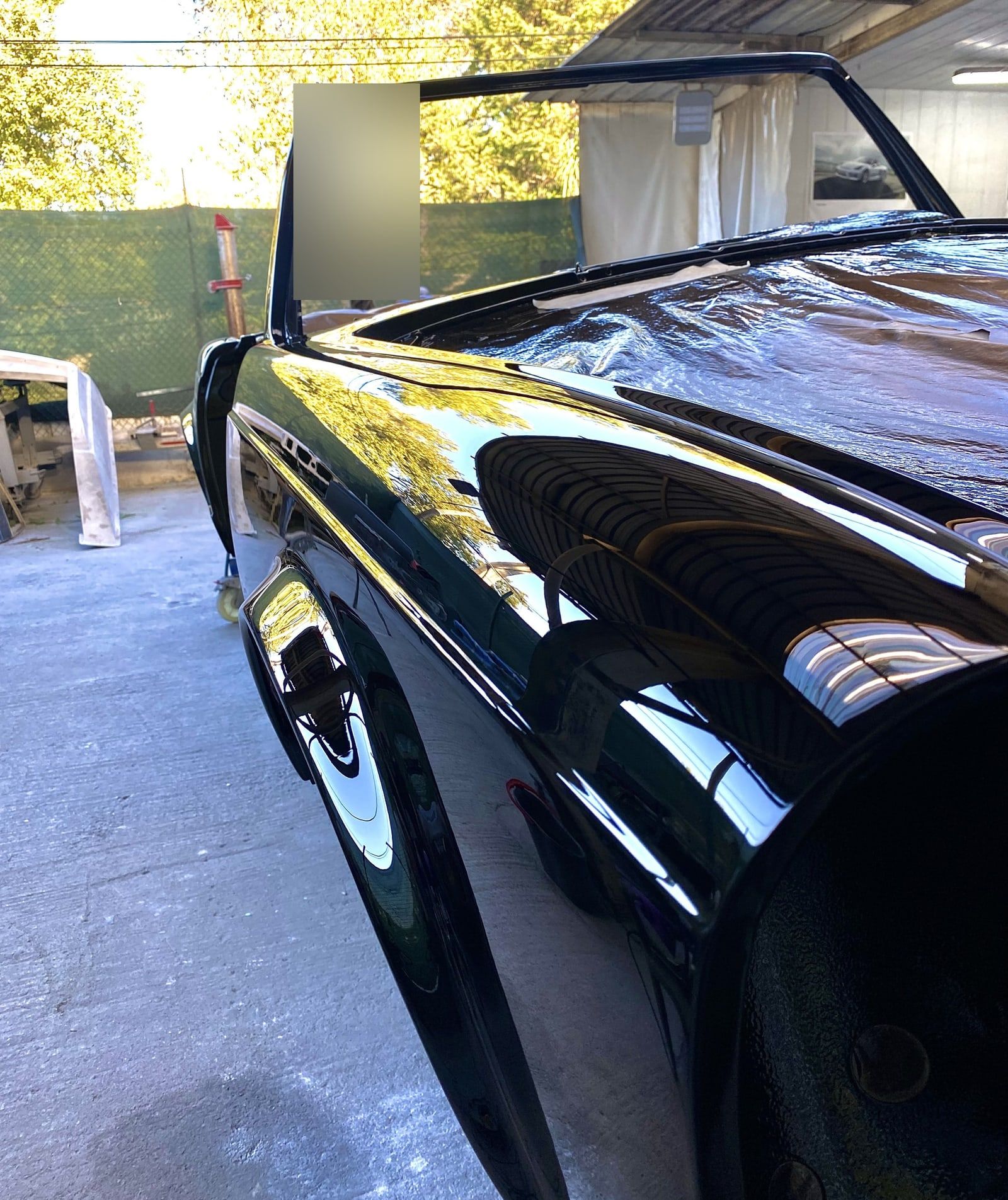
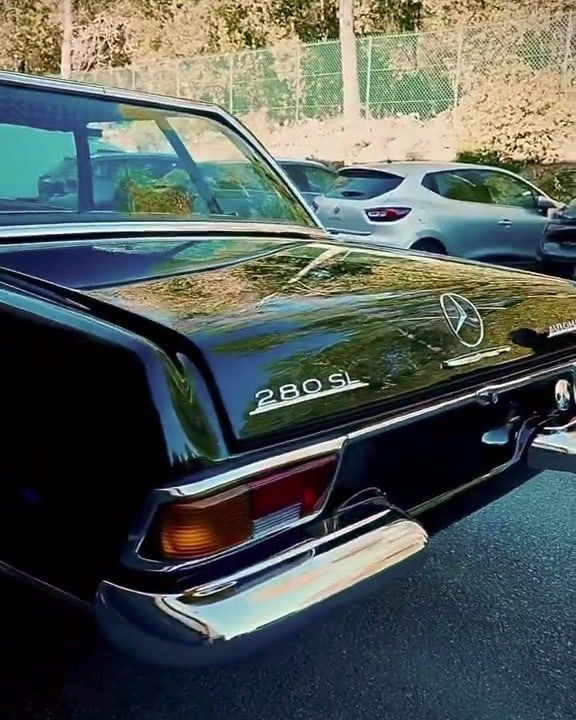
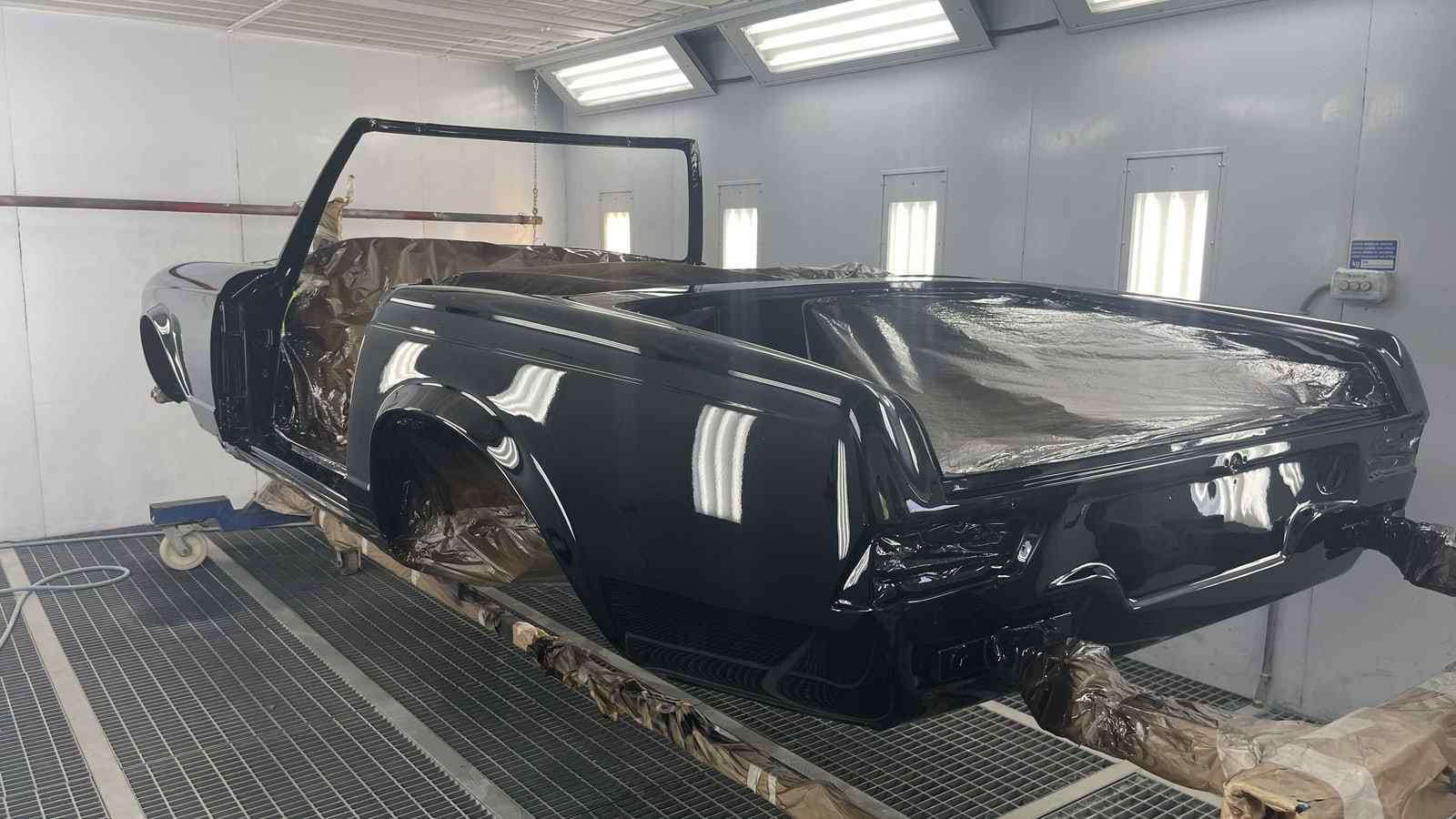
These parts are removed and painted in the same session as the shell, so that the shade is identical everywhere. The 280 SL Pagoda in our workshop was finished in black over a bare-metal shell; the 220 SEb Cabriolet in ivory, carried right into the engine bay.
Bare metal or blend: two different jobs
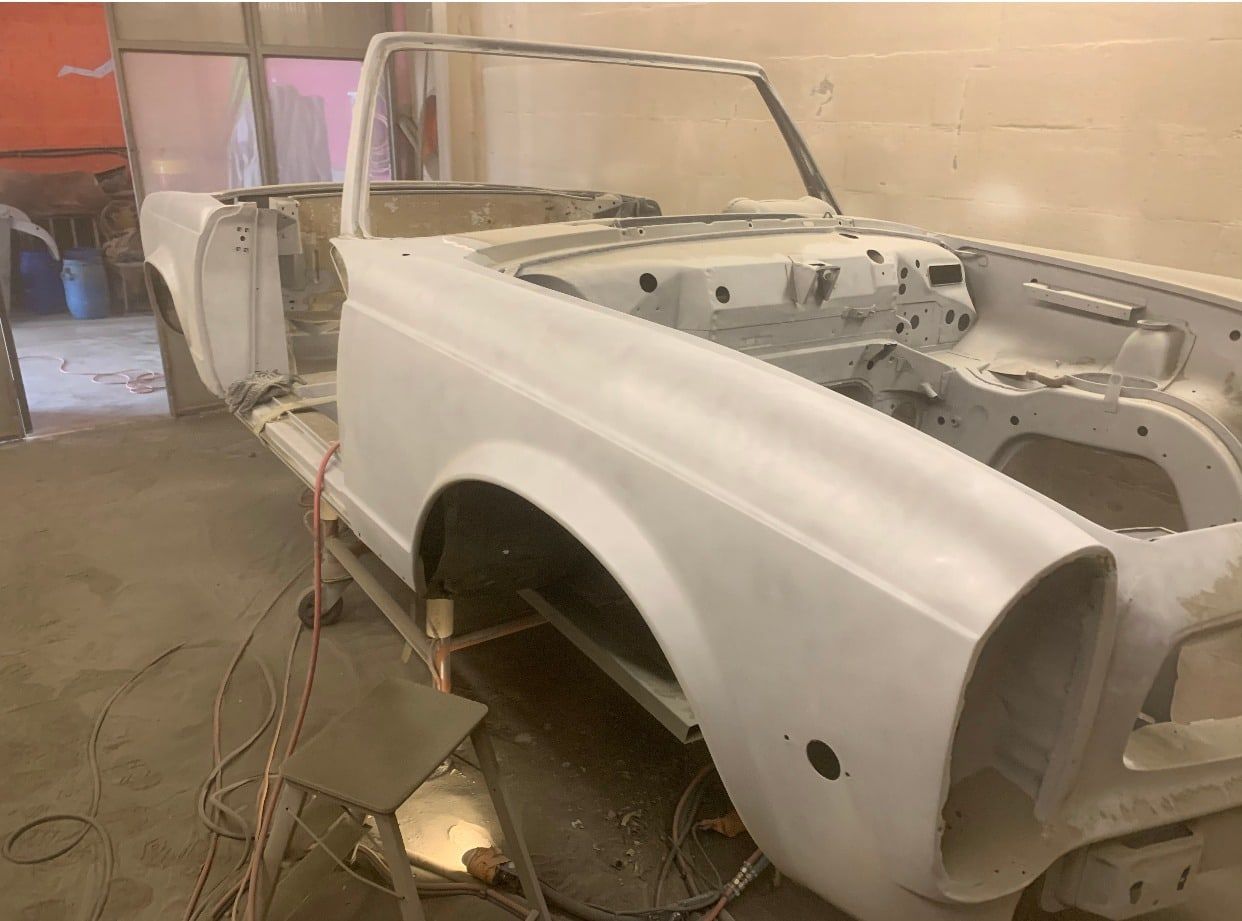
A full repaint over a bare shell shows the true state of the metal, and assumes the bodywork of the Mercedes is put right before the primer goes on. Blending a single panel is another exercise: new colour has to melt into old paint, which is harder with a metallic grey than with a solid white. On the aluminium panels of the classic SLs, surface preparation is adapted to that metal.
Recent Mercedes: hard lacquers, designo colours and matt finishes
Since the 2000s Mercedes-Benz has used a clear coat loaded with ceramic particles, more resistant to scratching. It flats and polishes differently from a conventional lacquer, and any local repair must allow for that. The designo colours, with special effects or several layers, require each coat to be applied in the right order and thickness.
The matt ‘magno’ finishes, common on AMGs and on the G-Class, cannot be polished: buffing makes them shine, and the mark stays. A scratch usually means repainting the whole panel. The workshop takes this work on and says so in the quotation; the general method is on the paintwork page.