How does the sun age car paint?
Ultraviolet light attacks horizontal surfaces first: bonnet, roof, boot lid, wing tops. On a lacquered car, the clear coat loses its transparency, whitens in patches, then lets go of the colour beneath. At that point it peels, and no amount of polishing brings it back: the panel has to be repainted.
The single-stage finishes of older cars age differently. The pigment oxidises at the surface and the colour turns flat and chalky; reds have a reputation for fading first. This oxidation stays superficial as long as the coat keeps its thickness.
What can be recovered, what must be repainted
The diagnosis comes down to three cases, which inspection of the car settles.
- old finish dulled but still thick: gradual polishing recovers the colour, and the original paint is kept;
- hazy clear coat with no lifting: paint correction restores its clarity;
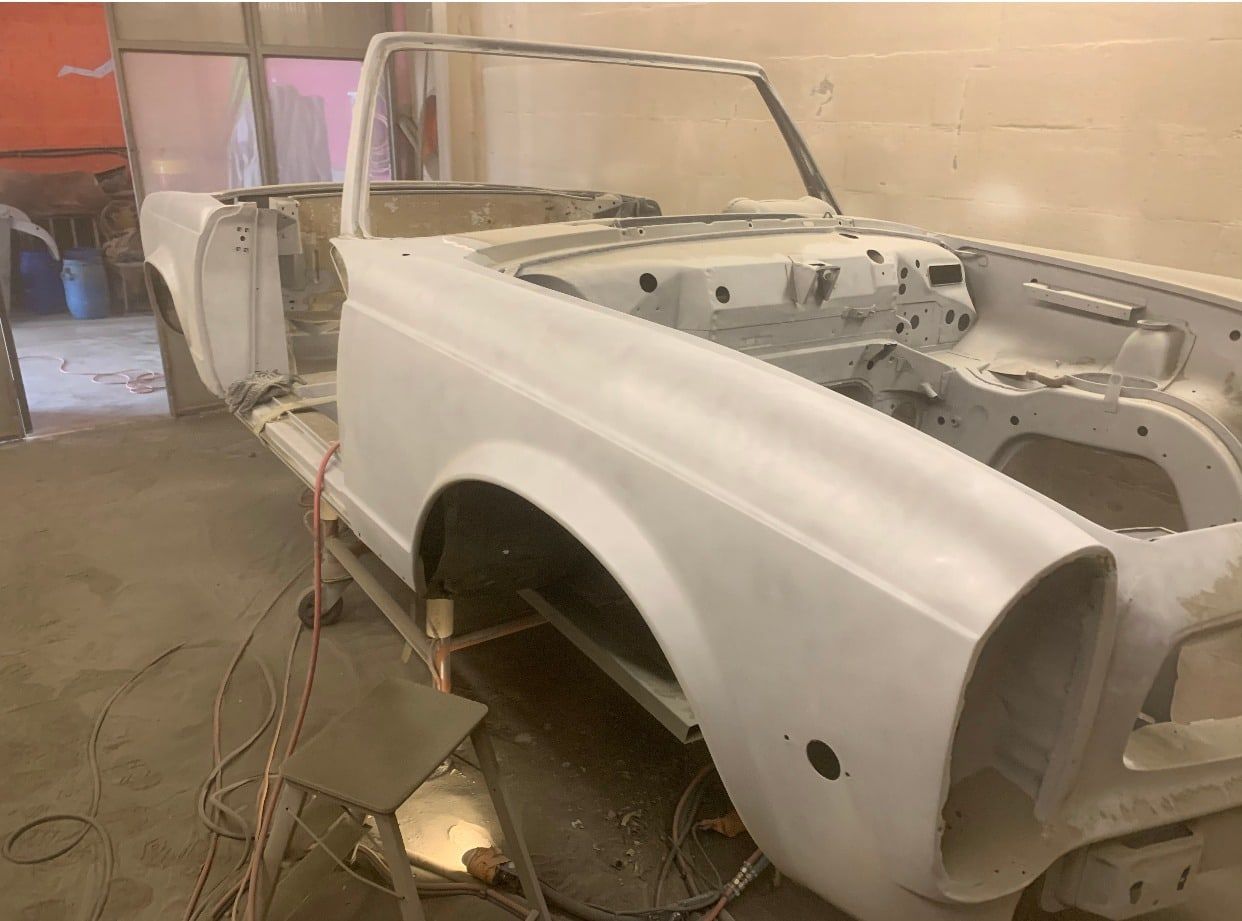
- peeling clear coat or paint worn through to primer: the panel is resprayed and blended into its neighbours.
Classic car paintwork on the Côte d’Azur: period lacquer or clear coat?
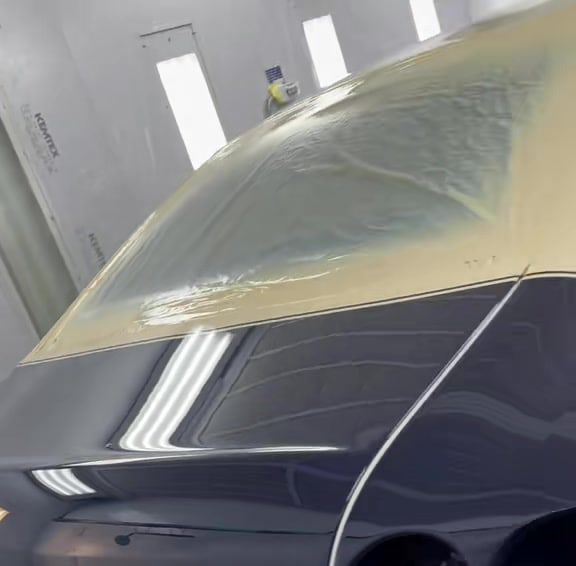
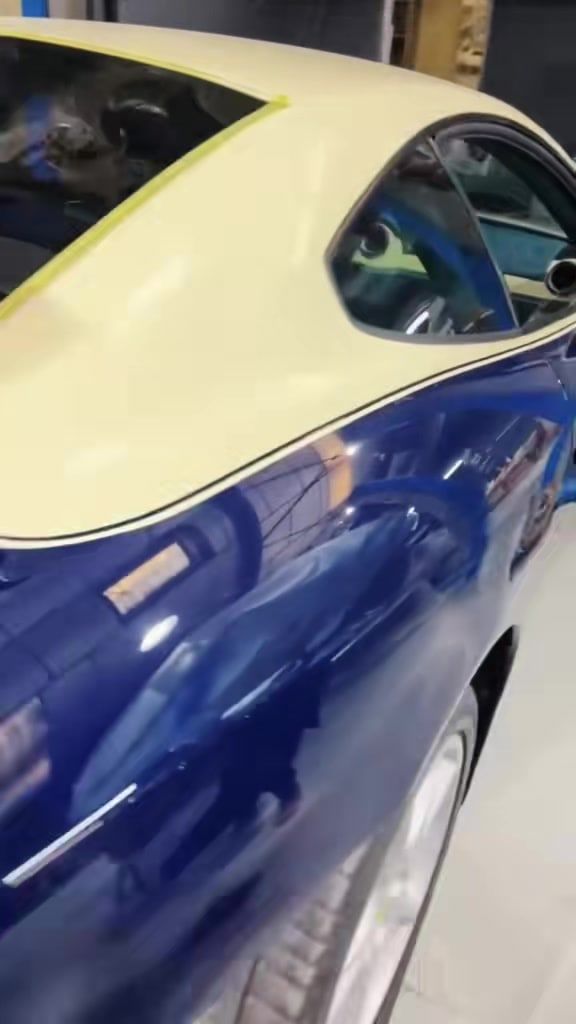
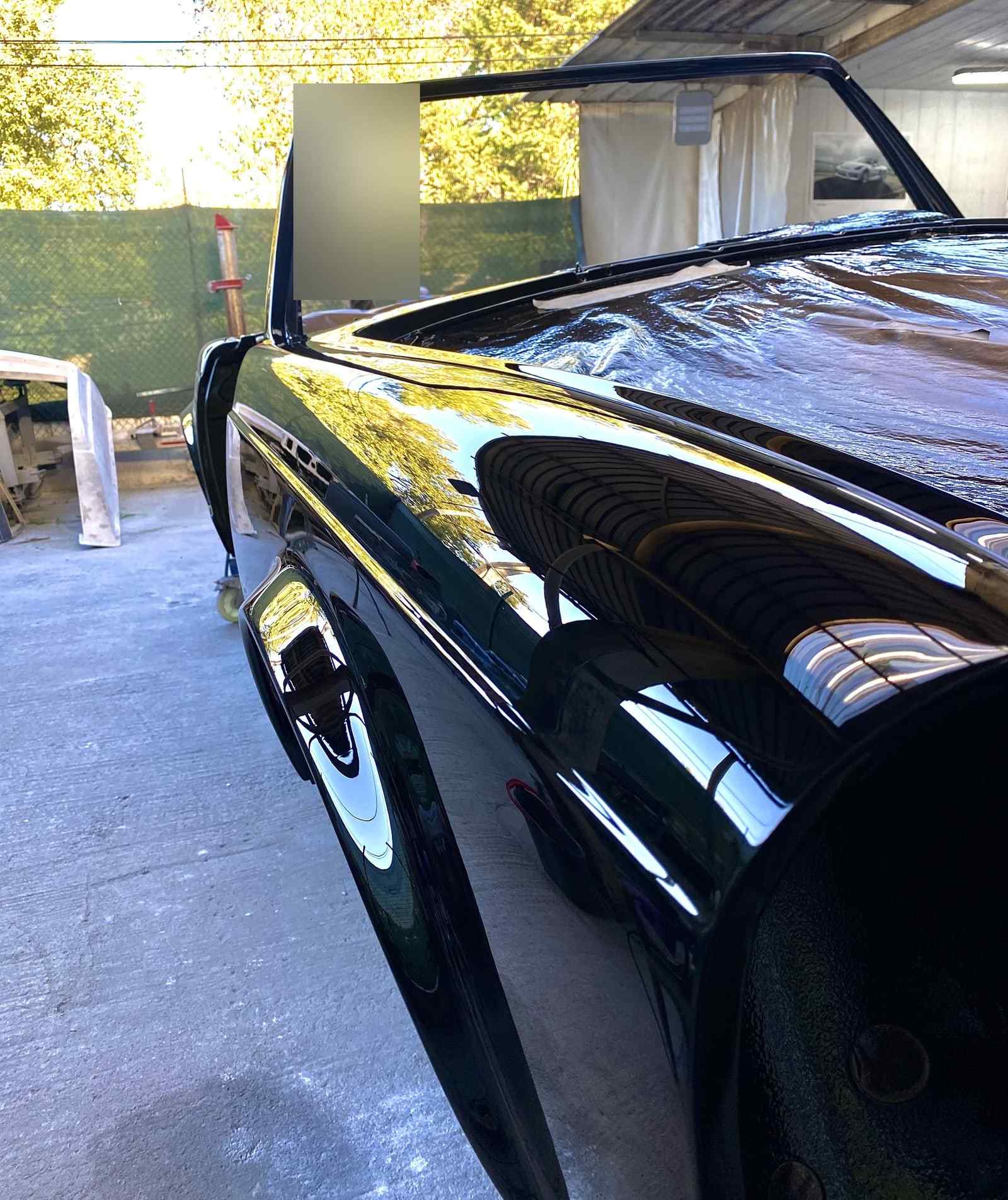
When a full respray is decided, climate enters the choice. A single-stage finish gives a classic its period look and can be revived by polishing; a colour coat under clear stands up better on a car that sleeps outdoors and is driven all year. The 1967 Porsche 911 S Targa painted ivory at the workshop illustrates a pale colour, little troubled by heat, on a car taken back completely.
Preparation, colour research and finishing are described on our classic and prestige car paintwork page. The workshop’s other completed projects show dark colours and a two-tone scheme.
Your town, your page
Original Classic And Luxury Cars is in Mougins, at the centre of the French Riviera. Each town has its habits and its page: paintwork in Mougins for following the job in person, paintwork in Cannes for polishing and convertibles, paintwork in Antibes for salt air, paintwork in Nice for scratches and blending, paintwork in Monaco for pearl and matt finishes.
Anywhere along the coast, and beyond, the car can travel by open or enclosed transporter, on request. The estimate is drawn up after inspection, or prepared remotely from photographs and video.